
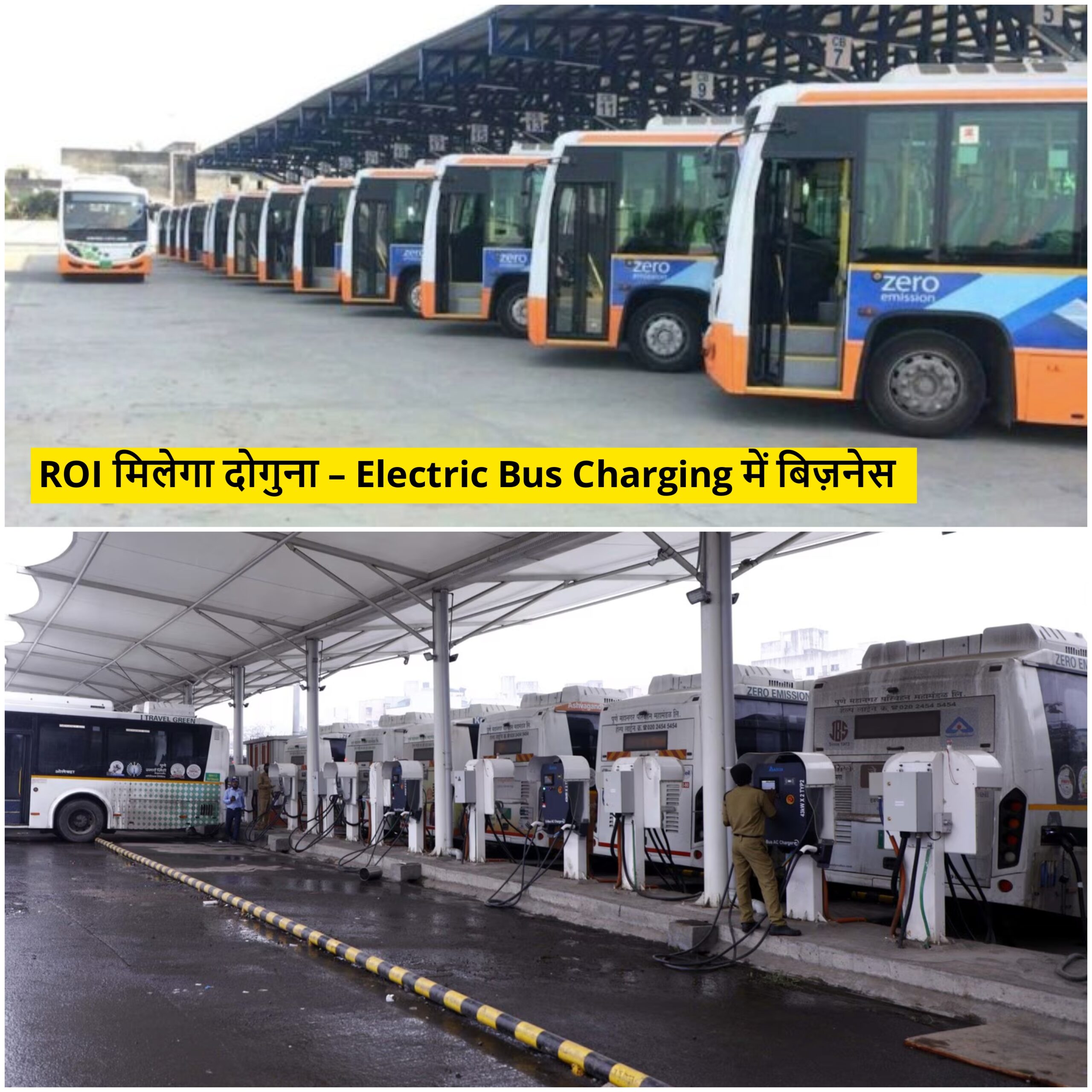
नमस्ते Entrepreneurs और Investors! क्या आप जानते हैं कि भारत सरकार ने 2030 तक 50,000 Electric Buses सड़कों पर उतारने का लक्ष्य रखा है? यह सिर्फ एक Environmental Goal नहीं, बल्कि एक Massive Business Opportunity है। हर Electric Bus को चलाने के लिए Charging Station की जरूरत होगी।
इस ब्लॉग में, हम आपको बताएंगे कि कैसे आप Electric Bus Charging Station Business में Entry कर सकते हैं, इसका Investment, ROI और Government Subsidies क्या हैं।
Market Opportunity in Electric Bus Charging Station Business: आंकड़े बोलते हैं
- Current Status: 2025 तक, भारत में 5,000+ Electric Buses Already Operational हैं।
- Future Target: 50,000 e-Buses by 2030 (Government of India Target)
- Charging Station Need: हर 10-15 Buses के लिए 1 Dedicated Charging Point की जरूurत होती है।
- Conclusion: अगले 5 सालों में 3,000-5,000 New Charging Stations की Requirement है।
Types of Electric Bus Charging: Business Models
आपका Business Model चुनना सबसे पहला कदम है।
- Depot Charging (Overnight Charging): बस Depot में Install किए जाते हैं। यह सबसे Common Model है।
- Opportunity Charging (En-route): Bus Stands या Terminals पर लगे होते हैं, जहाँ बसों को 15-20 मिनट में Fast Charging मिल जाती है।
- Battery Swapping Stations: खाली Battery को Fully Charged Battery से बदलना। (अभी Emerging Technology है)।
Investment Breakdown: Charging Station लगाने में कितना खर्च आएगा?
Investment Size आपके Charger Type और Scale पर निर्भर करता है।
| Expense Head | Depot Charging (Slow/Moderate) | Opportunity Charging (Fast/DC) |
| Charging Equipment | ₹15-25 लाख | ₹40-60 लाख |
| Civil Work & Installation | ₹5-10 लाख | ₹10-15 लाख |
| Electrical Infrastructure | ₹10-20 लाख | ₹20-30 लाख |
| Land Cost (Lease) | ₹2-5 लाख/वर्ष | ₹3-6 लाख/वर्ष |
| Software & Management | ₹2-3 लाख | ₹3-5 लाख |
| Total Estimated Investment | ₹35-60 लाख | ₹75-115 लाख |
Government Subsidies: आपकी Investment Cost कम करने के लिए
सरकार Charging Infrastructure Setup पर अलग-अलग Subsidies दे रही है।
1. FAME-II Scheme (Central Government):
- Charging Infrastructure के लिए ₹1 Crore तक की Financial Assistance।
- Eligibility: Public Charging Stations के लिए।
2. State-wise EV Policies:
- Delhi: Capital Subsidy up to ₹6 Lakh per charging station।
- Maharashtra: 25-30% of Charging Equipment Cost तक Subsidy।
- Gujarat: ₹50,000 per charger या 25% of project cost, whichever is less।
- Karnataka: ₹25 Lakh per station for first 500 stations।
3. Other Incentives:
- Green Energy Fund से Low-Interest Loans।
- State GST Concession on Equipment Purchase।
Revenue Model: पैसा कैसे कमाएंगे?
आपके पास Multiple Revenue Streams हो सकते हैं,
- Charging Service Fee: प्रति Unit (kWh) Electricity के Rate से ज्यादा Charge करना। (e.g., Supply Cost: ₹8/kWh, Customer Charge: ₹12-15/kWh)।
- Fixed Monthly Fee: Bus Operators के साथ Monthly Contract बनाना।
- Demand Charges: Peak Hours में Extra Charges।
- Service & Maintenance Contracts: बस Operators को Additional Services देना।
क्या आप कंफ्यूज़ हैं कि गियर वाली या गियरलेस ई-बाइक भारतीय सड़कों के लिए सही विकल्प है? जानने के लिए पढ़ें – Gear vs Gearless Electric Bikes: कौन सी है भारतीय सड़कों के लिए बेहतर?
ROI Calculation: Return on Investment Analysis
मान लीजिए आपने एक Depot Charging Station लगाया है,
- Total Investment: ₹50 Lakh
- Daily Usage: 10 Buses Charging (Average)
- Daily Consumption per Bus: 100 kWh
- Service Fee Margin: ₹4/kWh (After Electricity Cost)
Daily Revenue: 10 Buses * 100 kWh * ₹4 = ₹4,000
Monthly Revenue: ₹4,000 * 30 = ₹1,20,000
Annual Revenue: ₹1,20,000 * 12 = ₹14.4 Lakh
Operational Expenses (Staff, Maintenance, Rent): ~₹30,000/माह = ₹3.6 Lakh/वर्ष
Annual Net Profit: ₹14.4 Lakh – ₹3.6 Lakh = ₹10.8 Lakh
ROI Period: ₹50 Lakh / ₹10.8 Lakh ≈ 4.5-5 Years
(Note: यह एक Estimated Calculation है। Actual Figures Location, Usage और Contracts पर निर्भर करेंगी।)
Step-by-Step Guide: Business कैसे शुरू करें?
- Business Plan: Detailed Plan बनाएं – Location, Investment, Revenue Model।
- Company Registration: Private Limited या LLP Company Register करें।
- Land Tie-up: STU Depot के पास Land Lease Agreement करें।
- Technical Approval: DISCOM से Electrical Load Approval लें।
- Subsidy Application: Relevant Government Agency के पास Apply करें।
- Equipment Procurement: BIS Certified Chargers खरीदें।
- Installation & Testing: Certified Engineers से Installation करवाएं।
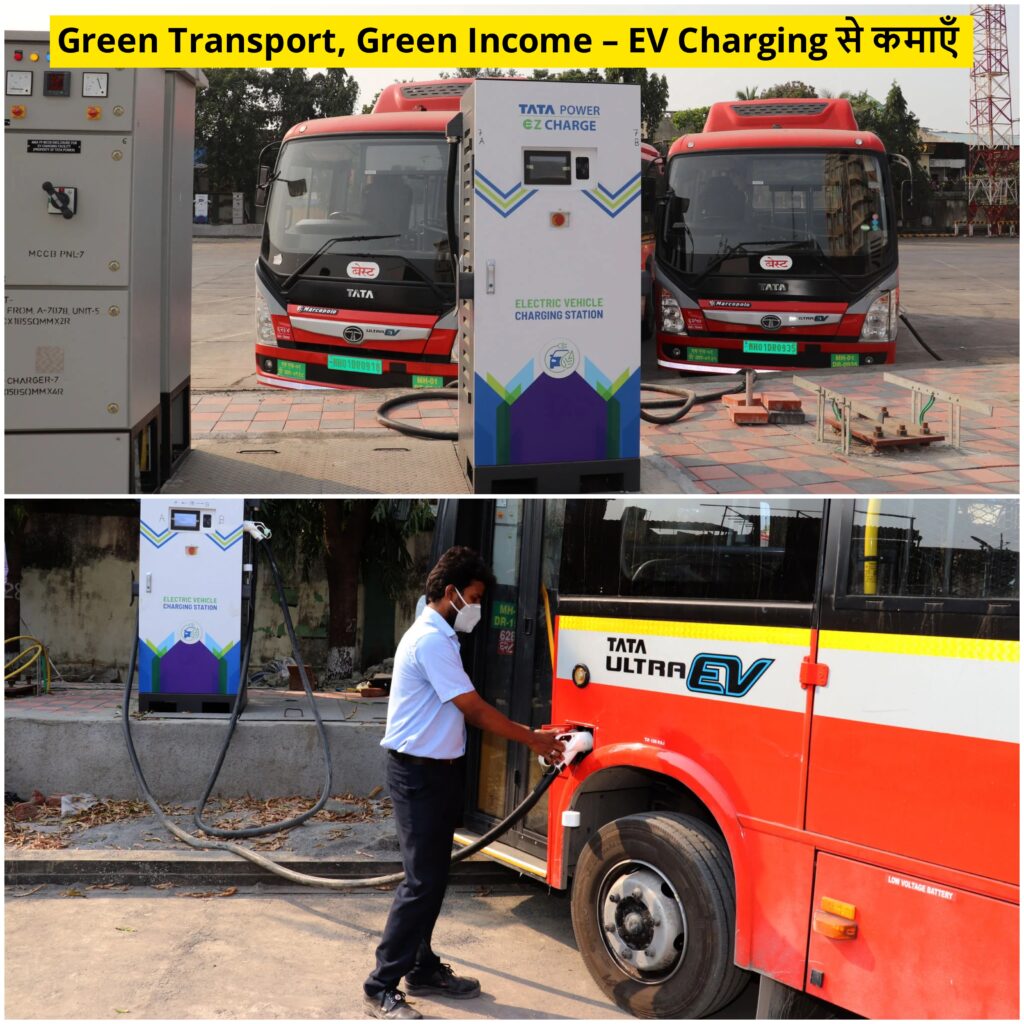
- Operations: Bus Operators के साथ Contract Sign कर Operations शुरू करें।
Challenges और Solutions
Challenge 1: High Initial Investment
- Solution: Government Subsidies और Bank Loans का Use करें।
Challenge 2: Land Availability
- Solution: State Transport Undertakings (STUs) के साथ Partnership करें।
Challenge 3: Power Supply Issues
- Solution: Solar Power Integration करें और Battery Storage System लगाएं।
अक्सर पूछे जाने वाले सवाल (FAQ)
1. Charging Station के लिए कितनी Electrical Load की जरूरत होती है?
एक Typical DC Fast Charger के लिए 100-150 kVA की Load Approval चाहिए। Depot Charging के लिए 500 kVA to 1 MVA तक की जरूरत पड़ सकती है।
2. क्या Private Companies Charging Station लगा सकती हैं?
हाँ, State Transport Departments Private Companies के साथ PPP (Public-Private Partnership) Model में काम कर रही हैं।
3. Charging Station के लिए License की जरूरत होती है?
जी हाँ, Electrical Inspectorate की Approval, DISCOM Connection, और CEIG (Chief Electrical Inspector to Government) की Clearance चाहिए।
निष्कर्ष: क्या यह Business Worth It है?
हाँ, बिल्कुल। Electric Bus Charging Station Business एक Long-term, Stable और Profitable Venture है। Government Support, Growing Demand, और Sustainable Business Model इसे एक Smart Investment बनाते हैं। हालाँकि, Success के लिए Strong Planning, Government Approvals, और Right Location बहुत जरूरी है।
अगर आप Infrastructure Sector में Long-term Investment ढूंढ रहे हैं, तो यह एक Golden Opportunity है।
संदर्भ (References)
- Ministry of Heavy Industries: FAME-II Scheme Guidelines for Charging Infrastructure.
- Bureau of Energy Efficiency (BEE): Public Charging Infrastructure Specifications.
- Delhi EV Policy: Subsidy Details for Charging Stations.
- Society of Manufacturers of Electric Vehicles (SMEV): Market Reports.
- Central Electricity Authority (CEA): Technical Standards for Charging Stations.

लेखक के बारे में (About the Author)
नमस्ते, मैं हूं Ashish Pandey – EVBikeWale का संस्थापक और मुख्य लेखक। मुझे इलेक्ट्रिक वाहनों के प्रति गहरा जुनून है और मैं भारत के ईवी इकोसिस्टम पर लगातार नजर रखता हूं। मेरा मिशन है हिंदी में सटीक, विस्तृत और भरोसेमंद जानकारी देकर भारतीयों को सही इलेक्ट्रिक वाहन चुनने में मदद करना।
मेरे साथ जुड़े रहें:
📢 Telegram |
📘 Facebook
अगर आप इलेक्ट्रिक बस सब्सिडी और अलग-अलग राज्यों की पॉलिसी व इंसेंटिव्स की जानकारी चाहते हैं, तो पढ़ें – Electric Bus Subsidies: State-wise Policy Comparison और Incentives की पूरी जानकारी
2 thoughts on “Electric Bus Charging Station Business: Investment, ROI और Government Subsidies”